

Dust can accumulate on Lego sets over time, causing wear and tear and even discoloration. To keep your cherished creations looking their best, it’s important to know how to properly clean dusty Legos. In this comprehensive guide, we will provide you with easy and effective tips on cleaning Legos, from basic dusting techniques to deep cleaning methods. Whether you have a small Lego set or a large collection, these cleaning tips will help you restore the shine to your Legos and keep them in pristine condition.
Key Takeaways:
- Regular cleaning is essential to prevent wear and tear and maintain the value of your Lego sets.
- Basic dusting techniques using a soft-bristled paintbrush, compressed air, or q-tips can remove surface dust.
- Deep cleaning methods like hand washing, washing machines, and color restoration techniques can rejuvenate your Lego pieces.
- Disinfecting and deodorizing Lego pieces can be done using vinegar, bleach, baking soda, and water solutions.
- Proper display and storage techniques can help prevent dust buildup on your Lego sets.
Cleaning your dusty Legos doesn’t have to be a daunting task. With the right techniques and a little effort, you can enjoy your Lego sets in their full glory for years to come. Let’s dive into the importance of cleaning dusty Legos and explore the various cleaning methods in detail.
Importance of Cleaning Dusty Legos
Dust accumulation on Lego sets is more than just an aesthetic problem. Over time, dust particles can scratch the surface of the bricks and cause noticeable wear and tear. In humid environments, dust can combine with moisture in the air, forming a grimy layer that’s hard to remove and can lead to discoloration. Furthermore, dust can depreciate the value of Lego collections and create difficulties when disassembling and reassembling sets. Regularly cleaning your dusty Legos is essential to prevent damage, maintain the vibrancy of the colors, and preserve the value of your collection.
By removing dust and dirt, you can protect the integrity and longevity of your Lego sets. Dust particles may seem innocuous, but they can have a detrimental effect on the quality and appearance of the bricks. Continuous exposure to dust can result in the gradual erosion of the bricks’ surface, leaving behind unsightly scratches and marks. Cleaning your Legos not only keeps them looking clean and pristine, but it also extends their lifespan.
| Benefits of Cleaning Dusty Legos | Prevention of Dust-Related Damage | Preservation of Value |
|---|---|---|
| Removal of surface dust and dirt | Diminished risk of scratches and wear | Increased resale value for collectors |
| Maintenance of vibrant colors | Prevention of discoloration | Enhanced market appeal for rare sets |
| Prevention of allergic reactions | Elimination of potential allergens | Protection of nostalgic sentiment |
Regularly cleaning your Legos also makes the building process smoother and more enjoyable. Dust and debris can accumulate in the interlocking mechanisms of the bricks, making it difficult to assemble and disassemble sets. By maintaining a clean and dust-free environment, you can ensure that each piece fits perfectly and that the building experience remains seamless.
In summary, cleaning dusty Legos is crucial for preserving the quality, value, and longevity of your collection. By taking the necessary steps to remove dust, you can protect your Legos from damage, maintain their vibrant appearance, and ensure a seamless building process. In the following sections, we will explore various techniques and tips for effectively cleaning your Legos, from basic dusting methods to deep cleaning solutions.
Basic Dusting Tips for Lego Sets
When it comes to keeping your Lego sets free from dust, there are a few basic techniques you can use to ensure that your bricks stay clean and pristine. These gentle dusting techniques are safe for your Legos and can easily be incorporated into your regular cleaning routine.
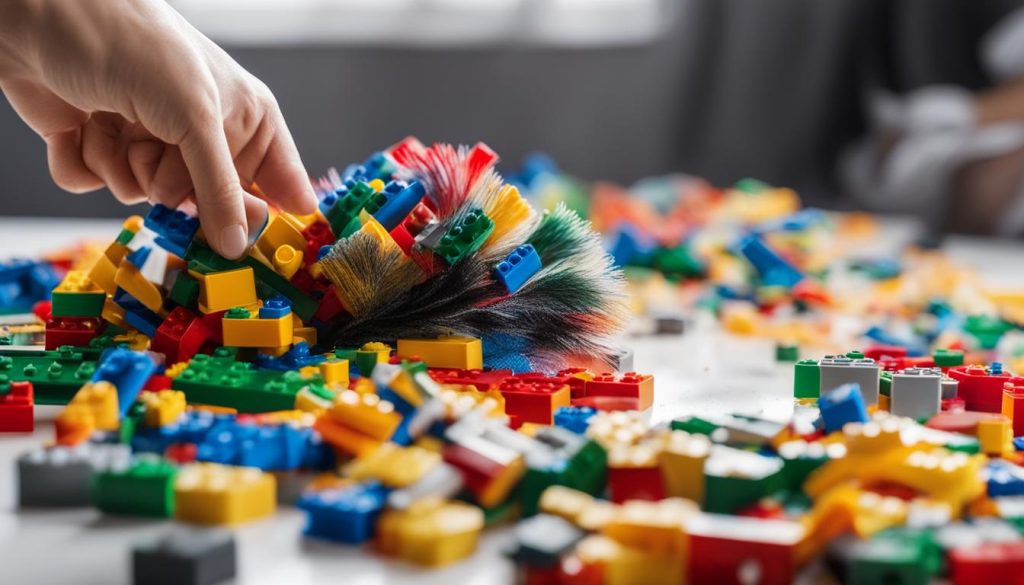
1. Using a Soft-Bristled Paintbrush: One effective method is to use a soft-bristled paintbrush to gently sweep across the surface of the Legos. This allows you to whisk away any dust and dirt that may have accumulated. Be sure to pay attention to the corners, crevices, and intricate designs of the Lego bricks.
2. Using Compressed Air: Another option is to use compressed air to blast away dust from hard-to-reach areas. Simply hold the can of compressed air a few inches away from the Lego set and blow away the dust. This technique is particularly useful for intricate builds and delicate Lego creations.
3. Using Q-tips: Q-tips can be a handy tool for targeting those problematic corners and crevices that a paintbrush may not reach. Dip the cotton tip of the Q-tip in warm water or mild detergent and gently wipe away any dust or dirt. Be careful not to use excessive force to avoid damaging the Lego bricks.
To illustrate the basic dusting techniques, refer to the following table:
| Technique | Description |
|---|---|
| Soft-Bristled Paintbrush | Gently sweep across Lego surfaces to remove dust and dirt. |
| Compressed Air | Blast away dust from hard-to-reach areas and intricate designs. |
| Q-tips | Target problematic corners and crevices with a gentle cleaning solution. |
By incorporating these basic dusting tips into your Lego cleaning routine, you can effectively remove surface dust and keep your Legos looking clean and shiny. Remember, regular dusting is essential for maintaining the overall appearance and longevity of your Lego sets.
Deep Cleaning Lego Pieces
For a more thorough cleaning of your Lego pieces, there are different methods you can use depending on the level of cleaning required. Here are some effective techniques to restore your Lego collection to its former glory:
Hand Washing Lego Bricks
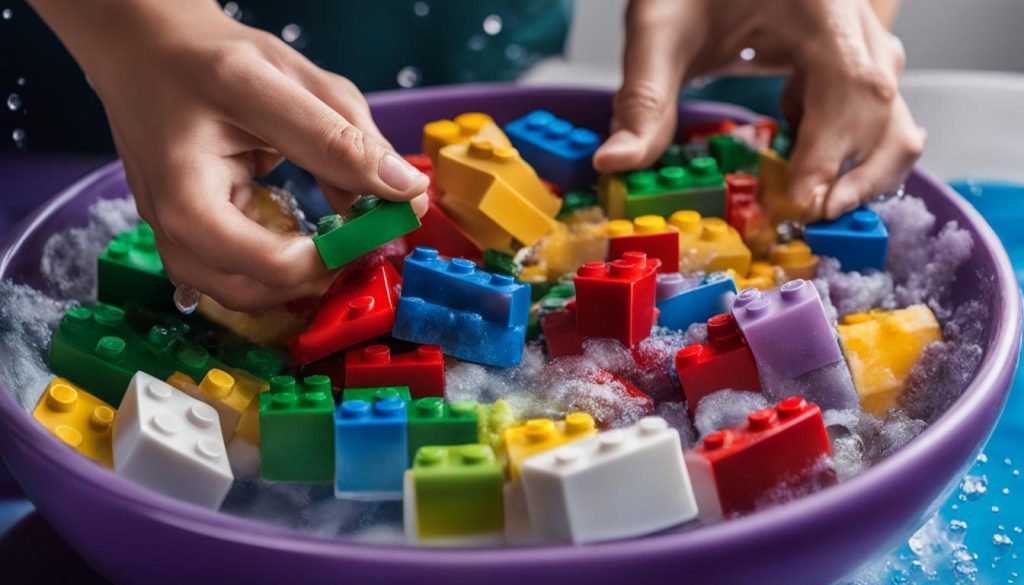
Hand washing Lego bricks is a safe approach for sensitive dye and old Lego pieces. To do this, you will need mild detergent or soap and lukewarm water. Follow these steps:
- Fill a basin or sink with lukewarm water.
- Add a small amount of mild detergent or soap to create a gentle cleaning solution.
- Place the Lego pieces in the soapy water and let them soak for a few minutes.
- You can use a soft toothbrush to scrub away dirt and grime from the nooks and crannies of the Lego bricks, if necessary.
- Rinse the Lego pieces thoroughly with clean water to remove any soap residue.
- Dry the Lego pieces completely before reassembling or storing them.
Washing Legos in a Washing Machine
Washing Lego bricks in a washing machine can be an alternative method for cleaning large quantities of Lego pieces. However, it’s essential to take caution and separate delicate and water-sensitive pieces to prevent damage. Here’s how to do it:
- Place the Lego pieces inside a mesh laundry bag or a pillowcase to protect them during the wash.
- Select a gentle cycle with cold water.
- Avoid using bleach or harsh detergents that can damage the Lego bricks.
- Once the cycle is complete, remove the Lego pieces from the bag or pillowcase and allow them to air dry thoroughly.
Restoring Discolored Lego Pieces
Over time, Lego pieces can become discolored due to exposure to light or environmental factors. To restore their original color, you can try the following method:
- Create a mixture of hydrogen peroxide and water.
- Submerge the discolored Lego pieces in the solution and let them soak for several hours.
- Place the Lego pieces in direct sunlight for a few days, allowing the sunlight to activate the hydrogen peroxide and remove the discoloration.
- Rinse the Lego pieces thoroughly and allow them to air dry before using or storing them.
Cleaning Lego Pieces with Stickers
If you have Lego pieces with stickers, extra care is needed to avoid damaging the stickers while cleaning. Follow these steps:
- Dampen a soft cloth or sponge with warm water.
- Gently wipe the Lego pieces, avoiding direct contact with the stickers.
- If there are stubborn stains or dirt, you can use a mild detergent or soap solution and a soft toothbrush to clean around the stickers.
- Rinse the Lego pieces thoroughly with clean water and allow them to air dry before handling them again.
Cleaning Lego Bricks with Hard Water Supply
For those who have hard water supply, mineral deposits can build up on Lego bricks, leaving a white residue. To prevent this, you can follow these steps:
- Rinse the Lego bricks with water to remove any loose dirt.
- Mix a solution of water and Jet-Dry dishwasher rinse aid.
- Submerge the Lego bricks in the solution and let them soak for a few minutes.
- Rinse the Lego bricks thoroughly with clean water to remove any residue.
- Allow the Lego bricks to air dry completely before using or storing them.
Incorporating these deep cleaning methods into your Lego maintenance routine will help you remove ingrained dirt, restore color, and rejuvenate your Lego pieces. Remember to handle your Lego pieces with care and always test any cleaning method on a small area before applying it to the entire collection.
Disinfecting and Deodorizing Lego Pieces
In addition to cleaning off dust and dirt, it’s important to disinfect and deodorize your Lego pieces to keep them clean, germ-free, and smelling fresh. Whether you want to remove lingering odors or ensure the cleanliness of your Lego collection, there are effective methods you can use.
Vinegar Solution for Disinfection:
A vinegar solution can act as a natural disinfectant for your Lego pieces. Mix equal parts white vinegar and water in a bowl. Submerge the Lego pieces in the solution for a few minutes, ensuring they are fully coated. Gently scrub the pieces with a soft brush or toothbrush to remove any dirt or grime. Rinse the Lego pieces thoroughly with water and allow them to air dry.
Bleach and Water Solution for Stronger Disinfection:
If you need a stronger disinfectant, you can create a bleach and water solution. Mix 1 part bleach with 10 parts water in a container. Place the Lego pieces in the solution for a few minutes, ensuring they are completely submerged. Stir the pieces occasionally to help remove any dirt or bacteria. After disinfection, rinse the Lego pieces thoroughly with water and allow them to air dry. It’s important to note that this method should only be used on compatible Lego pieces and not on colored or printed parts.
Removing Unpleasant Smells:
To remove unpleasant smells from your Lego pieces, you can use a combination of baking soda and white vinegar. Create a paste by mixing baking soda with a small amount of water. Apply the paste to the smelly areas of the Lego pieces and let it sit for a few hours. Afterward, lightly spray the Lego pieces with white vinegar. The vinegar will react with the baking soda, causing a fizzy reaction that helps eliminate the odor. Rinse the Lego pieces with water and allow them to air dry.
Special Cleaning Process for Smoke or Urine Smell:
If your Lego pieces have been exposed to smoke or urine, there’s a specific cleaning process you can follow. Create a paste by mixing baking soda with a small amount of water. Apply the paste to the affected areas and let it sit for a few hours. Afterward, mix equal parts white vinegar and water in a container and soak the Lego pieces in the solution for a few minutes. Rinse the pieces thoroughly with water and allow them to air dry.
These methods for disinfecting and deodorizing Lego pieces will help you maintain a clean and fresh collection. Remember to always test any cleaning solution on a small, inconspicuous area of the Lego piece before applying it to the entire set. By keeping your Lego pieces clean and smelling great, you can continue to enjoy building and playing with them for years to come.
Display and Storage Tips to Prevent Dust Buildup
Prevention is key when it comes to keeping your Lego sets dust-free. By taking the right steps to display and store your Legos, you can minimize dust buildup and prolong their lifespan.
Displaying Lego Sets in Enclosed Cases
To protect your Lego sets from dust, consider displaying them in enclosed cases or cabinets. This creates a barrier that prevents dust particles from settling on the surfaces of your Legos. Not only does this keep them clean, but it also showcases your collection in a visually appealing way.
Using Air Filters for Legos
Another effective method to prevent dust buildup is by utilizing air purifiers with HEPA filters in your Lego display area. These filters trap even the tiniest airborne particles, reducing the amount of dust that settles on your Legos. Clean and fresh air not only keeps your Legos cleaner, but it also contributes to a healthier environment.
Regular Dusting of Lego Sets
Regular dusting is crucial in maintaining a dust-free environment for your Legos. Aim to dust your Lego sets every 1-2 weeks, using a soft, dry cloth or a feather duster. This helps remove any loose dust that may have settled despite your preventive measures.
Proper Storage of Legos
When not on display, proper storage is essential to prevent dust accumulation on your Legos. Store your sets in airtight containers or resealable plastic bags to keep them safe from dust particles in the air. This extra layer of protection ensures that your Legos stay clean and dust-free until their next use.
Following these display and storage tips will help minimize dust buildup on your Lego sets, keeping them looking clean and fresh. By taking preventative measures and incorporating regular maintenance into your Lego care routine, you can enjoy your Legos for years to come.
Additional Tips for Cleaning Legos
In addition to the basic and deep cleaning methods mentioned earlier, there are some additional tips that can make the cleaning process easier.
1. Using Sticky Slime for Lego Cleaning:
You can use sticky slime to remove dust and debris from hard-to-reach spots and tiny gaps in your Lego sets. Simply press the slime onto the surface of the Legos and then lift it off, and watch as the slime picks up dirt and dust particles.
Pro Tip: Make your own sticky slime by mixing equal parts liquid starch and clear glue. Adjust the consistency as needed.
A handheld vacuum with a brush attachment is a handy tool for cleaning Legos. It can effectively suck up dust from tricky Lego crevices, making it easier to remove dirt and debris.
Pro Tip: Set the vacuum to a low suction setting to avoid accidentally picking up small Lego pieces.
3. Using Microfiber Cloth for Lego Dusting:
Microfiber cloths are excellent for dusting Legos as they trap dust particles without scratching the surface. Gently wipe the Legos with a slightly damp microfiber cloth to remove dust and give them a polished look.
Pro Tip: Avoid using fabric softeners or dryer sheets with microfiber cloths, as they can leave a residue.
By incorporating these additional tips and utilizing tools like sticky slime, handheld vacuums, and microfiber cloths, you can enhance your Lego cleaning routine and ensure thorough cleaning of every nook and cranny.
Conclusion
Keeping your Lego sets clean and dust-free is crucial for maintaining their shine and preserving their value. In this comprehensive guide, we have provided you with easy and effective tips on how to clean dusty Legos. Whether you opt for basic dusting techniques, deep cleaning methods, or additional cleaning tips, regular maintenance is key to ensuring your Lego collections remain in pristine condition for years to come.
By following the outlined tips and techniques, you can easily remove dust, dirt, and grime from your Lego sets, restoring them to their former glory. Regular maintenance not only keeps your Legos looking clean and shiny but also helps prevent damage, discoloration, and wear and tear caused by accumulated dust particles. So take the time to clean your Legos and enjoy the brilliance of your cherished Lego creations.
Remember, maintaining the shine of your Legos is an ongoing process. Incorporate these cleaning practices into your Lego care routine to ensure that your collection stays vibrant and valuable. With proper cleaning and care, your Legos will continue to bring joy and inspiration to builders of all ages for years to come!
FAQ
How often should I clean my Legos?
It is recommended to dust your Legos every 1-2 weeks to prevent heavy buildup. Deep cleaning can be done as needed.
What is the best way to remove surface dust from Legos?
You can use a soft-bristled paintbrush, compressed air, or Q-tips to gently remove dust from your Legos.
Can I wash Lego bricks in a washing machine?
Washing Lego bricks in a washing machine is possible, but delicate and water-sensitive pieces should be separated and caution must be taken.
How can I restore discolored Lego pieces?
Hydrogen peroxide and sunlight exposure can help restore discolored Lego pieces.
How do I clean Lego pieces with stickers?
Gentle hand cleaning is recommended for Lego pieces with stickers.
What can I do to prevent dust buildup on my Lego sets?
Displaying Lego sets in enclosed cases or cabinets and using air purifiers with HEPA filters can help minimize dust accumulation.
What is a good natural disinfectant for Lego pieces?
Vinegar solution can be used as an effective natural disinfectant for Lego pieces.
How can I remove unpleasant smells from Lego pieces?
A paste of baking soda and water followed by a spray of white vinegar can help remove unpleasant smells from Lego pieces.
What additional tools can I use for cleaning Legos?
Sticky slime, a handheld vacuum with a brush attachment, and microfiber cloths can be used for more thorough cleaning of Legos.
