

Cleaning and sterilizing Lego bricks is essential, especially when they are frequently used by children. Maintaining hygiene is crucial for their health and safety. In this article, we will explore some quick and effective methods to safely sterilize and clean your Legos, ensuring they are germ-free and hygienic.
Key Takeaways:
- Regularly cleaning and sterilizing Lego bricks is important for maintaining hygiene.
- Separate Lego pieces before cleaning to ensure thorough disinfection.
- Use soap or detergent for cleaning batches of Lego bricks.
- Add white vinegar to the water to sanitize the Lego pieces.
- Dry Lego pieces thoroughly after cleaning to prevent mold growth.
Separating and Cleaning Lego Pieces
To thoroughly clean and sterilize Lego pieces, it’s important to first separate them. This ensures that each piece receives proper attention and cleaning. Additionally, separating Lego pieces allows for easier handling during the cleaning process.
When cleaning stickered Lego bricks, it’s essential to be gentle to avoid damaging the stickers. Using a soft cloth or an old toothbrush, gently scrub the surface of the stickered bricks. This will help remove any dirt or grime without compromising the integrity of the stickers.
For larger batches of Lego bricks, soap or detergent can be used to effectively clean them. Fill a basin or sink with warm water and add a small amount of soap or detergent. Swish the Lego bricks gently in the soapy water, ensuring that each piece is thoroughly cleaned. This method is especially useful for removing general dirt and dust accumulated over time.
In addition to soap or detergent, adding white vinegar to the water can help sanitize the Lego bricks. White vinegar has natural antibacterial properties, making it an effective cleaning agent. By adding a small amount of white vinegar to the water, you can ensure that the Legos are not only clean but also free from germs.
After cleaning the Lego pieces, it’s crucial to dry them thoroughly. Damp or wet Lego pieces can encourage the growth of mold or mildew, which can be harmful to both the bricks and the people handling them. Lay the Lego pieces in a well-ventilated area and allow them to air dry completely before storing or using them.
Lastly, if you notice any scuff marks or stubborn stains on your Lego bricks, a Mr. Clean Magic Eraser can be used to remove them. Simply dampen the Magic Eraser and gently rub it on the affected areas. The Magic Eraser’s texture helps to lift away scuffs and stains without damaging the Lego bricks.
In summary, separating and cleaning Lego pieces is an essential step in maintaining their cleanliness and hygiene. By following these tips and using appropriate cleaning methods, you can ensure that your Legos are not only visually appealing but also safe for play. Remember to handle each piece with care and enjoy the process of keeping your Lego collection in pristine condition.
Cleaning and Dusting Built Lego Models
Built Lego models require regular cleaning and dusting to prevent the accumulation of dust and maintain their cleanliness. Neglecting to clean your Lego models can result in the build-up of dirt, which can be unsightly and potentially damage the Lego pieces over time. To keep your built Lego models looking their best, follow these cleaning and dusting tips.
Vacuuming for Dusting Legos
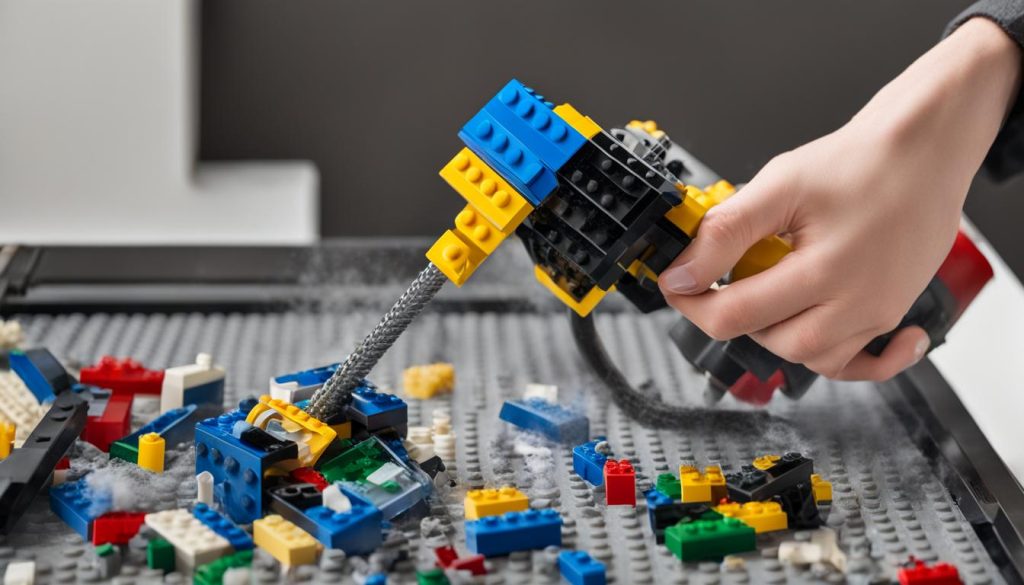
Vacuuming is an effective way to remove dust from hard-to-reach areas of your built Lego models. Use a vacuum cleaner with a hose attachment to gently suction dust off the surface of the Lego pieces. Be sure to use a low suction setting to prevent any damage to the Lego bricks. Additionally, consider using a soft brush attachment to clean intricate details and tight spaces.
Using Clorox Disinfecting Wipes
Clorox disinfecting wipes can be a convenient option for cleaning the hard surfaces of your built Lego models. These wipes effectively remove dust, dirt, and germs, leaving your Lego models clean and hygienic. Wipe the Lego pieces gently with the disinfecting wipes, focusing on areas that are frequently touched or prone to dust accumulation. Remember to let the Lego models air dry after wiping them with disinfecting wipes.
Routine Dusting of Legos
Regular dusting is vital to prevent the build-up of dust on your built Lego models. Use a soft, clean makeup brush or a dedicated Lego dusting brush to gently brush off any loose dust from the Lego pieces. Be thorough in your dusting, paying attention to all the nooks and crannies of the models. Set a routine for dusting your Lego models to ensure they stay clean and free from dust.
By regularly cleaning and dusting your built Lego models, you can maintain their appearance and prevent dust-related issues. Vacuuming, using Clorox disinfecting wipes, and routine dusting are effective methods to keep your Lego models in pristine condition.
Hand Washing and Washing Machine Methods
When it comes to cleaning your LEGO bricks, hand washing is a safe and effective method, especially for delicate or sensitive parts. Here’s how you can do it:
- Prepare a cleaning solution: Fill a basin or sink with lukewarm water and add a small amount of mild detergent.
- Separate multi-part LEGO units: Before washing, carefully separate multi-part LEGO units to ensure proper cleaning.
- Hand wash the LEGO bricks: Gently scrub the LEGO bricks with your hands or a soft-bristled brush to remove dirt and grime. Pay extra attention to any intricate details or hard-to-reach areas.
- Rinse thoroughly: Rinse the LEGO bricks under running water to remove any soap residue.
- Air dry the LEGO pieces: Place the LEGO bricks on a clean towel or drying rack and let them air dry completely. Avoid using heat sources or direct sunlight, as they can cause discoloration or warping.
In addition to hand washing, you can also use alcohol wipes to clean delicate or electrical LEGO pieces. Simply wipe the surfaces gently to remove any dirt or germs.
If you have a large batch of LEGO bricks to clean, you may consider using a washing machine. However, it’s important to take precautions to prevent heat damage:
- Contain the LEGO bricks: Place the LEGO bricks inside a mesh laundry bag or pillowcase to prevent them from getting tangled or damaged during the washing process.
- Select a gentle cycle: Choose a gentle or delicate cycle on your washing machine to minimize the risk of damage.
- Use cold water: Set the washing machine to a cold water temperature to avoid heat-related issues.
- Avoid using detergent: Skip the detergent when using a washing machine, as it may be difficult to completely rinse it off.
- Air dry the LEGO pieces: After the washing machine cycle is complete, remove the LEGO bricks from the bag or pillowcase and air dry them thoroughly.
By following these hand washing and washing machine methods, you can keep your LEGO bricks clean and ready for play or display.
Restoring Discolored Lego Pieces
Lego pieces discolored over time can be easily restored to their original vibrant colors with a simple cleaning process. To remove discoloration, one effective method is to use hydrogen peroxide and sunlight.
Here’s a step-by-step guide to restoring discolored Lego pieces:
- Start by preparing a cleaning solution using hydrogen peroxide. Mix equal parts of hydrogen peroxide and water in a container.
- Place the discolored Lego pieces in the solution, ensuring they are fully submerged. Allow them to soak for about 24 hours.
- After soaking, remove the Lego pieces from the solution and rinse them thoroughly with clean water. This step is crucial to remove any residue.
- Next, lay the rinsed Lego pieces on a towel or place them in a well-ventilated area to air dry. Ensure they are completely dry before using or storing them to prevent mold or mildew growth.
It’s worth noting that the exposure to sunlight plays a vital role in accelerating the discoloration reversal process. So, find a sunny spot to place the Lego pieces during the drying phase.
Additionally, if you come across any smoke or urine smell on your Lego pieces, you can combat it by using a baking soda paste. Simply mix baking soda with water to create a paste, apply it to the affected areas, and let it sit for some time before rinsing off and drying the Lego pieces.
Remember, when cleaning and restoring Lego pieces, it’s important to avoid using harsh chemicals or abrasive cleaners as they can damage the plastic. Stick to gentle cleaning methods and be patient with the discoloration reversal process.
Restoring the original color and vibrancy of your Lego pieces not only makes them visually appealing but also enhances their overall value and longevity. Follow these cleaning steps to revitalize your Lego collection and enjoy building with clean, pristine bricks.
Conclusion
Cleaning and sterilizing Lego bricks is essential for maintaining hygiene, especially when they are used by children. By following these methods, you can ensure that your Legos are clean, sanitized, and free from germs and odors. Regular cleaning and maintenance will help preserve the quality and longevity of your Lego collection.
FAQ
How should I separate and clean Lego pieces?
To clean Lego pieces effectively, start by separating them. Stickered bricks can be cleaned using a soft cloth or an old toothbrush. For larger batches of Lego bricks, you can use soap or detergent in the water, and adding white vinegar helps sanitize them. After cleaning, make sure to dry the pieces thoroughly, and any scuff marks can be removed using a Mr. Clean Magic Eraser.
How do I clean and dust built Lego models?
Built Lego models should be regularly cleaned and dusted to prevent dust accumulation. Vacuuming with a hose attachment can remove dust from hard-to-reach areas, and using a makeup brush can help with delicate cleaning. Clorox disinfecting wipes can be used to clean the hard surfaces of Lego models. Routine dusting should be done to maintain cleanliness.
What are the methods for hand washing and washing machine cleaning of Lego bricks?
Hand washing Lego bricks is a safe approach, especially for delicate or sensitive parts. Alcohol wipes can be used to clean electrical or delicate pieces. Lukewarm water and mild detergent are effective for cleaning Lego bricks. Washing machine methods can also be used, but it’s important to take precautions to prevent heat damage. After washing, Lego pieces should be air dried.
How can I restore discolored Lego pieces?
Discolored Lego pieces can be restored by using a cleaning process. This involves using hydrogen peroxide and sunlight to reverse discoloration. After cleaning, rinse the pieces thoroughly and allow them to air dry. Additionally, using baking soda paste can help remove odors from Lego pieces. Avoid using harmful chemicals for cleaning Lego bricks.
