

Making a fidget spinner with Lego bricks is a fun and creative project that both kids and adults can enjoy. This tutorial will provide you with easy-to-follow steps to create your own custom Lego fidget spinner. With just a few Lego pieces, you can build a spinner that spins satisfyingly and demonstrates the principles of physics.
Key Takeaways:
- Create your own custom Lego fidget spinner using these easy steps.
- Building a Lego fidget spinner is a fun and creative project for all ages.
- A Lego fidget spinner can spin satisfyingly and demonstrate the principles of physics.
- Customize your spinner using different colors and shapes of Lego pieces.
- Building a Lego fidget spinner promotes creativity, problem-solving, and engineering skills.
The Basics of Lego Fidget Spinner Design
To build a Lego fidget spinner, you will need a few basic Lego pieces, including round plates, round tiles, axles, and various plates to add weight and stability. The design involves creating a structure that allows for smooth spinning while distributing the weight evenly. Adding arms to the spinner can increase momentum and spinning time. By following the provided instructions, you can create a functional and enjoyable fidget spinner design.
When designing your Lego fidget spinner, it’s important to consider the following:
- Start with a round plate as the base. This will serve as the foundation for the spinner.
- Attach round tiles to the base plate, ensuring they are evenly spaced around the edge.
- Insert an axle through the center of the base plate and secure it with round hole tiles on both sides.
- Choose different colored round plates to add weight and stability to the spinner.
- If desired, add additional spinning arms by attaching plates underneath the base plate.
By following these basic steps, you can create a Lego fidget spinner that is not only visually appealing but also functional and enjoyable to spin. The customizable nature of Lego allows for endless possibilities in design, allowing you to create a fidget spinner that is unique to your personal style and preferences.
Why Design Matters
“The design of a Lego fidget spinner plays a crucial role in its performance. A well-balanced spinner with evenly distributed weight will spin smoothly and maintain momentum. By considering the design elements and incorporating them into your creation, you can ensure a satisfying spinning experience.” – Lego enthusiast and fidget spinner aficionado, Mark Johnson.
Designing your own Lego fidget spinner is not only a creative outlet but also a chance to explore the principles of physics. By experimenting with different shapes, sizes, and weights, you can gain an understanding of how these factors impact the spinning motion. This hands-on approach to learning makes the process of building a Lego fidget spinner both educational and entertaining.
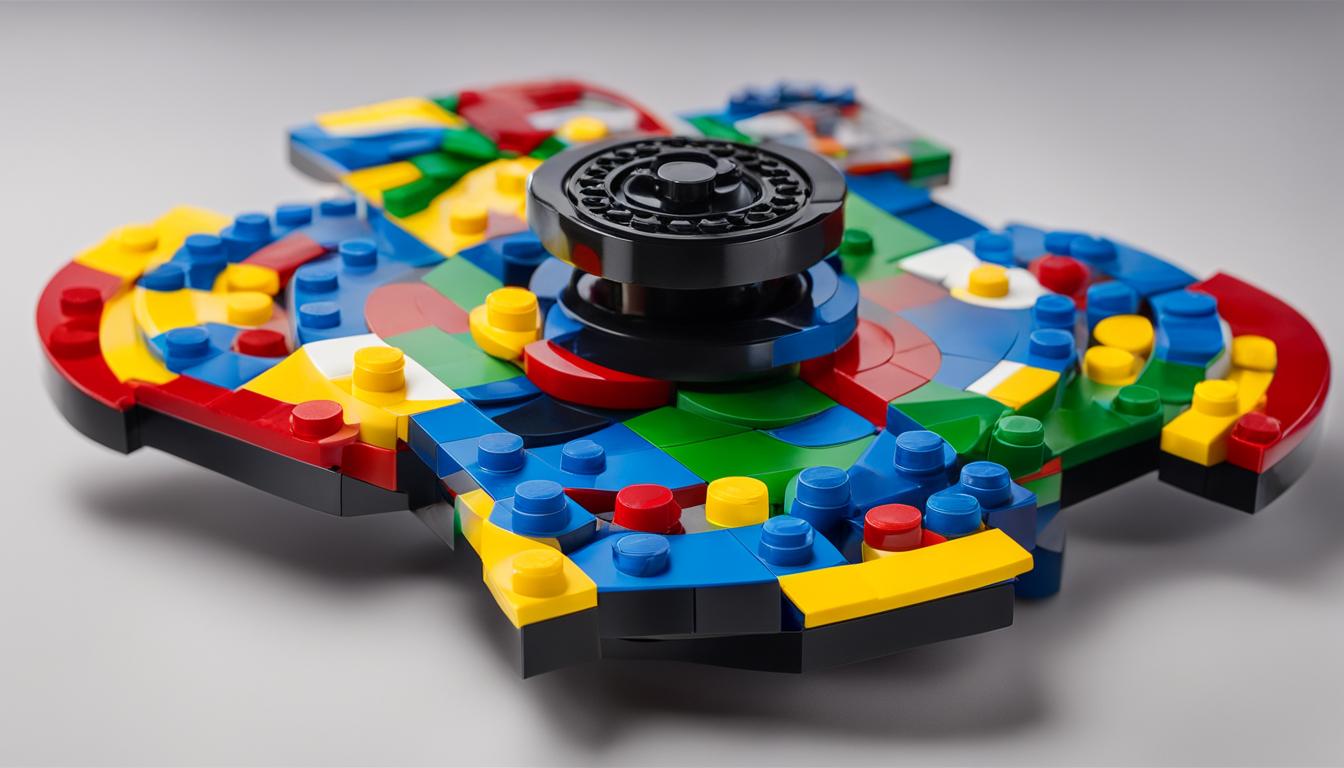
The image above showcases a visually appealing Lego fidget spinner design that incorporates various colored plates and spinning arms. The balanced distribution of weight ensures a smooth and satisfying spinning experience.
Step-by-Step Instructions for Building a Lego Fidget Spinner
Building your own Lego fidget spinner is a rewarding and enjoyable activity. With just a few simple steps, you can create a custom spinner that spins smoothly and provides hours of entertainment. Follow this step-by-step guide to construct your Lego fidget spinner.
Gather the Required Lego Pieces
- Round plates
- Round tiles
- Axles
- Various plates for added weight and stability
Assemble the Spinner Structure
- Start by placing two round plates on both the top and bottom sides of a larger round plate.
- Slide an axle with a round hole tile onto the assembly.
- Add a turquoise round plate onto the axle.
- Attach another round tile to the axle and connect it to a dark red round plate to complete the spinning mechanism.
Create Additional Spinning Arms
To enhance the spinning motion of your Lego fidget spinner, you can add extra spinning arms. Here’s how:
- Add a few plates underneath the turquoise round plate.
- Place the additional spinning arms evenly around the spinner.
- Ensure that the weight is distributed evenly for optimal spinning performance.
Once you have completed these steps, your Lego fidget spinner is ready for action. Hold it between your fingers, give it a flick, and watch it spin! Experiment with different designs and color combinations to customize your spinner to your liking.
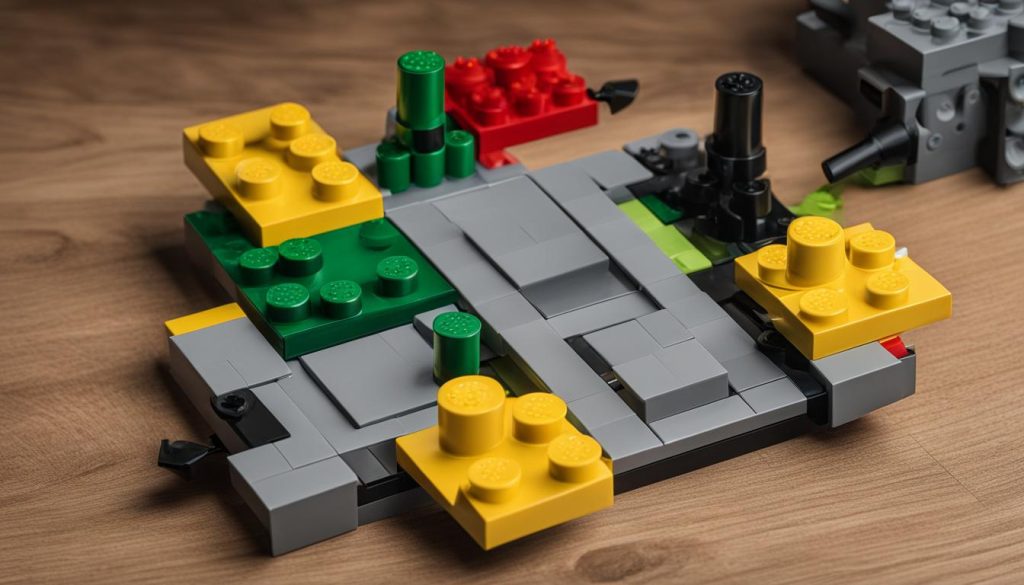
Note: For a visual guide, refer to the image below:
The Benefits of Making a Lego Fidget Spinner
Making a fidget spinner made out of legos has several benefits. It allows for customization, as you can choose your own color combinations and add unique features. Building the spinner encourages creativity, problem-solving, and engineering skills. Additionally, it provides a hands-on activity that can help relieve stress and promote focus. Making a fidget spinner out of Legos is also a cost-effective option compared to buying pre-made spinners.
By building a fidget spinner with legos, you have the freedom to personalize it according to your preferences. You can choose your favorite Lego colors and create unique patterns or designs. Adding LEGO minifigures or other decorative elements can also give your spinner a personal touch. With Legos, the possibilities are endless.
When building a fidget spinner with Legos, you engage in a creative process that stimulates your problem-solving and engineering skills. You have to think about the placement of the different Lego pieces, balancing weight distribution, and ensuring smooth spinning. This hands-on activity allows you to experiment and learn while having fun.
Furthermore, the act of building and spinning a Lego fidget spinner can have a calming effect and help relieve stress. The repetitive motion of spinning the spinner can provide a sensory experience and promote relaxation. It can be a helpful tool for individuals who have difficulty focusing or need something to keep their hands busy.
In addition to the creative and stress-relieving benefits, making a fidget spinner out of Legos is also a cost-effective alternative to buying pre-made spinners. You can utilize the Legos you already have at home, saving money on purchasing a new spinner. It’s a fun and budget-friendly option for anyone interested in fidget toys.
Overall, building a fidget spinner with Legos offers a range of benefits, from customization and creativity to stress relief and cost savings. It’s a rewarding and enjoyable DIY project that combines the fun of Lego building with the satisfaction of spinning. So gather your Lego bricks and start crafting your own unique fidget spinner!
Comparison of Lego Fidget Spinners vs. Pre-Made Spinners
| Benefits | Lego Fidget Spinners | Pre-Made Spinners |
|---|---|---|
| Customization Options | Choose colors and features | Limited design options |
| Cost | Use existing Lego pieces | May be more expensive |
| Skills Development | Encourages creativity and problem-solving | No building required |
| Stress Relief | Engaging hands-on activity | May provide sensory experience |
Other Lego Projects and Resources
If you enjoy building with Legos, there are plenty of other projects and resources available. Websites and books dedicated to Lego creations provide inspiration for various projects, including candy dispensers, robots, airplanes, animals, and more. You can also explore STEM projects and find step-by-step instructions for different Lego builds. Additionally, Lego books with instructions can be a valuable resource for expanding your Lego-building skills.
Whether you’re a beginner or an experienced Lego builder, these resources offer a wealth of ideas to fuel your creativity and keep you engaged. Here are some popular Lego project ideas to inspire your next building adventure:
- Build a fully functional candy dispenser using colorful Lego bricks and gears.
- Create your own Lego robot with moving parts and sensors for an interactive experience.
- Construct an impressive Lego airplane with detailed wings and a realistic cockpit.
- Bring your favorite animals to life by building Lego versions of lions, elephants, or dolphins.
In addition to these project ideas, you can explore the world of STEM (Science, Technology, Engineering, and Mathematics) with Lego. Many resources provide step-by-step instructions for building machines, conducting experiments, and exploring scientific concepts.
Lego books with instructions are also a valuable resource for expanding your Lego-building skills. These books offer detailed guides to creating specific models, from architectural landmarks to vehicles and more.
Remember, the only limit to your Lego creations is your imagination. With an ever-expanding range of Lego sets, online communities, and project ideas, the possibilities are endless. So, grab your bricks and let your creativity soar!

Lego Project Ideas
| Project | Description |
|---|---|
| Candy Dispenser | Build a fully functional candy dispenser using colorful Lego bricks and gears. |
| Lego Robot | Create your own Lego robot with moving parts and sensors for an interactive experience. |
| Lego Airplane | Construct an impressive Lego airplane with detailed wings and a realistic cockpit. |
| Lego Animals | Bring your favorite animals to life by building Lego versions of lions, elephants, or dolphins. |
The Popularity of Fidget Spinners
Fidget spinners became immensely popular, especially among kids, due to their ability to provide a sensory experience and help relieve anxiety and restlessness. The Lego fidget spinner tutorial builds on this popularity by combining the enjoyment of building with Legos and the satisfaction of spinning. By following the provided instructions, you can create a fidget spinner that is both entertaining and calming.

| Benefits of Fidget Spinners | Benefits of Lego Fidget Spinners |
|---|---|
| Relieve anxiety and restlessness | Provide a sensory experience |
| Help improve focus and concentration | Encourage creativity and problem-solving |
| Compact and portable | Customizable with different color combinations |
As seen in the table above, fidget spinners offer various benefits such as relieving anxiety and improving focus. The Lego fidget spinner takes these benefits a step further by allowing customization through different colors and Lego building techniques. It not only provides a tactile experience but also sparks creativity and problem-solving skills.
Building and spinning a Lego fidget spinner can be a therapeutic activity that engages both the mind and the hands, providing a calming and satisfying experience. Plus, it’s a great way to showcase your creativity and enjoy the popular trend of fidget spinners.
Why Choose a Lego Fidget Spinner?
There are several reasons why a Lego fidget spinner is a fantastic choice:
- Affordability: Legos are widely available and cost-effective compared to purchasing pre-made fidget spinners.
- Customization: With Lego bricks, you have the freedom to design your spinner with your preferred colors and unique features.
- Engaging Activity: Building a fidget spinner with Legos is a hands-on activity that can provide a sense of accomplishment.
- Learning Opportunity: Constructing a Lego fidget spinner introduces basic engineering principles and encourages problem-solving skills.
By building a Lego fidget spinner, you can enjoy the benefits of fidgeting while also indulging in your love for Lego creations. It offers a satisfying combination of creativity, relaxation, and playfulness.
The Versatility of Lego Fidget Spinners
Lego fidget spinners are not only a source of endless entertainment but also provide incredible versatility in design and customization. Once you have mastered the basic spinning mechanism, you can unleash your creativity and explore various possibilities to create unique spinners.
One of the exciting aspects of Lego fidget spinners is the ability to experiment with different colors, shapes, and sizes of Lego pieces. By incorporating a wide range of vibrant hues, you can personalize your spinner and make it truly one-of-a-kind. Whether you prefer a sleek and monochromatic design or a bold and vibrant spinner, Lego gives you the freedom to express your style.
Furthermore, Lego fidget spinners can go beyond the traditional spinner design. You can incorporate additional features and elements into your spinner by combining it with other Lego creations. Imagine adding mini figurines, decorative patterns, or even functional accessories to your spinner. The versatility of Lego allows you to create spinners that cater to your unique interests and preferences.
The adaptability of Lego fidget spinners extends to their interconnectivity. You can easily modify and transform your spinner by connecting different Lego modules or removing specific pieces. This dynamic feature enables you to switch up your spinner’s design whenever inspiration strikes. Whether you want to switch between different spinner arm lengths or experiment with various spinning mechanisms, Lego empowers you to explore new ideas and push the boundaries of spinner design.
The possibilities are truly endless when it comes to Lego fidget spinner customization. Let your imagination run wild and create spinners that reflect your personality, interests, and style.

With Lego, the only limit is your creativity. Take your fidget spinner-building skills to the next level and unleash your inner designer. Experiment with different combinations, explore unique features, and discover the joy of creating your very own DIY Lego fidget spinners.
Conclusion
Creating a fidget spinner with Legos is an enjoyable and hands-on project that combines the satisfaction of building with the fun of spinning. By following the step-by-step instructions provided in this tutorial and harnessing your creativity, you can craft a custom Lego fidget spinner that matches your personal preferences. Lego fidget spinners not only provide a unique way to keep your hands busy but also offer a great DIY option for individuals interested in fidget toys.
Building a Lego fidget spinner allows you to develop your building skills while exploring the principles of physics through practical experimentation. The versatility of Legos enables you to customize your spinner with different colors, shapes, and sizes of bricks, making each creation unique. It’s a great activity for both kids and adults, fostering creativity, problem-solving, and fine motor skills.
So, gather your Lego bricks and start building your own fidget spinner today! With just a few simple steps, you’ll have a custom-made toy that provides entertainment, relaxation, and a sense of accomplishment. Discover the joy of making a fidget spinner with Legos and enjoy the endless possibilities of this engaging DIY project.
FAQ
What materials do I need to make a Lego fidget spinner?
To make a Lego fidget spinner, you will need round plates, round tiles, axles, and various plates for weight and stability.
How do I build a Lego fidget spinner?
Follow these steps: Place round plates on both the top and bottom of a larger round plate. Slide an axle with a round hole tile onto the assembly, and add a turquoise round plate. Connect another round tile to the axle and attach it to a dark red round plate. Add plates underneath the turquoise round plate to create extra spinning arms.
What are the benefits of making a Lego fidget spinner?
Making a Lego fidget spinner allows for customization, encourages creativity and problem-solving skills, provides a hands-on activity, and is a cost-effective option compared to buying pre-made spinners.
Are there other Lego projects and resources available?
Yes, there are websites and books dedicated to Lego creations that provide inspiration for various projects and STEM-focused builds. Lego books with instructions can also help expand your Lego-building skills.
Why are fidget spinners popular?
Fidget spinners became popular among kids due to their sensory experience and ability to relieve anxiety and restlessness.
Can Lego fidget spinners be customized?
Yes, once you master the basic spinning mechanism, you can experiment with different colors, shapes, and sizes of Lego pieces to create unique spinners. Lego fidget spinners can also be modified and combined with other Lego creations.
