

Short Answer
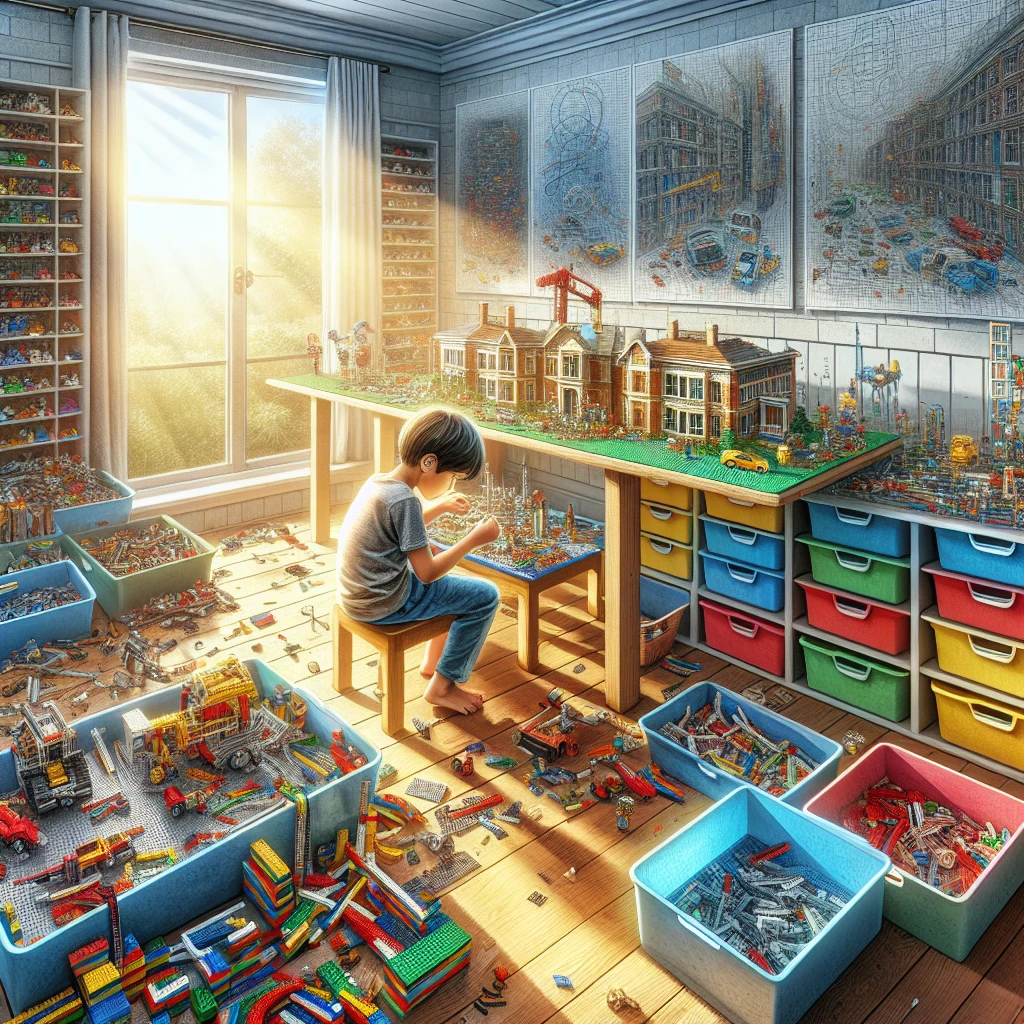
Lego construction enhances spatial intelligence by improving the ability to visualize and manipulate objects in the mind, beneficial for STEM education.
[product_card link=”https://www.amazon.com/s?k=LEGO+Classic+Large+Creative+Brick+Box&tag=bwv-lc” name=”Lego Classic Large Creative Brick Box” show_tag=”true” img1=”https://m.media-amazon.com/images/I/91SXHJRqWqL._AC_UL320_.jpg” img2=”https://m.media-amazon.com/images/I/71CmoxVnqFL._AC_UL320_.jpg”]
What is the impact of Lego construction on spatial intelligence in the brain? This question probes a significant connection in child development between playful assembly and cognitive growth.
Lego play nurtures an understanding of complex spatial relationships, proving vital for STEM-related learning.
Spatial intelligence is the ability to visualize and manipulate objects in one’s mind, a foundational skill for success in science, technology, engineering, and math (STEM) fields. Leveraging Lego bricks in imaginative construction enhances this form of intelligence, preparing learners for future academic and career endeavors.
The act of building with Legos exercises and strengthens spatial reasoning, which is essential for interpreting and organizing information in both the physical and abstract realms.
Yes, Lego construction positively impacts brain development, specifically by refining executive functions such as attention, working memory, and self-regulation. These critical cognitive processes are engaged as individuals concentrate on building, recall design plans, and adjust actions to achieve their creative objectives.
Such benefits underscore the importance of incorporating Lego play into educational activities to foster enhanced spatial intelligence among learners.
Key Takeaways
-
Lego play nurtures spatial intelligence, crucial for mastering STEM-related topics by fostering understanding of complex spatial relationships.
-
Building with Legos strengthens spatial reasoning, aiding in organizing both physical and abstract information.
-
Engaging in Lego construction activities enhances executive functions such as attention, working memory, and self-regulation.
-
Both structured and unstructured Lego play are important for cognitive benefits, with structured play focusing on precision and problem-solving, while unstructured play encourages creativity and adaptability.
-
Research suggests a statistical improvement in spatial skills post engagement with construction play activities such as Lego.

The Concept of Spatial Intelligence Brain
Delving into the definition of spatial intelligence and how it pertains to cognitive domains.
Spatial intelligence, folks, it’s yuge. It’s like being able to understand where things are and where you are, it’s about knowing the landscape better than anyone. Let’s say you’re building something magnificent, something beautiful – like a tower or, you know, a wall. You need spatial intelligence! This intelligence lets you perceive the positions, the dimensions, the relationships between objects – it’s very smart, believe me. And it’s part of the cognitive domains; it’s not just about seeing, it’s about thinking. It’s about that mental map in your brain, which, by the way is the best kind of map. It’s connected to other areas of your brain, enabling you to visualize and problem-solve like a champ!
Understanding the roles of mental rotation and spatial visualization in real-world scenarios.
Mental rotation – it’s like turning a key in a lock, but with your mind. You’ve got to see the angles, make the turn, and click, it works! It’s critical in the real world, it’s what children do with their Legos. They rotate, they match, they click it into place – it’s a beautiful thing. And spatial visualization is tremendous. You’re visualizing something that’s not even there. Can you imagine it? I do it all the time. I visualize big things, the best things. It’s what helps pilots fly planes, surgeons perform operations. They see the unseen. It’s very powerful, it’s very smart, it’s what makes some people winners – it’s about making great decisions with great speed.
Can Playful Construction Activities Function as a Kind of Spatial Skills Training?
Absolutely, believe me, playful construction activities like LEGO play are not just fun, they are the best, biggest, most incredible method to boost those all-important brain skills, like spatial intelligence. It’s fantastic, really. We’re talking about engaging the mind, improving problem-solving capabilities, and enhancing spatial reasoning, which is just tremendous for the development of our young people.
Examining the educational perspective of Lego play as a method for enhancing spatial intelligence.
Listen, the educational benefits of LEGO play are huge – they’re impressive! It’s not just about putting blocks together; it’s a rigorous mental workout. When kids play with LEGO, they’re basically learning how to visualize and manipulate objects in space – and fast! This is about actively shaping young minds to think in 3D, and that’s the real deal for enhancing spatial intelligence. Our kids are creating worlds, solving problems, and becoming little geniuses in the process. It’s remarkable, truly.
Analyzing how structured block play compares to unstructured play in terms of cognitive benefits.
Structured block play is like sending your brain to the gym for a heavy-duty workout – it’s powerful! We’re talking about following complex instructions, planning, measuring – skills that are going to make you win big in life. And unstructured play? It’s the freedom for kids to explore, to innovate, to make the rules themselves, which ignites creativity like never before. Both are essential – they’re the dynamic duo of cognitive development. We need both, frankly, to raise the smartest, most capable kids. It’s going to be fantastic, the improvements we’ll see in spatial reasoning with this kind of play!
| Aspect | Structured Block Play | Unstructured Play |
|---|---|---|
| Cognitive Benefits | Spatial reasoning, planning and problem-solving skills | Creativity, innovation and self-expression |
| Skill Development | High precision, analytical thinking | Free-form thinking, adaptability |
| Instructions | Detailed, sequential | None, open-ended |
| Outcome | Pre-determined results | Unique, varied outcomes |
| Impact on Kids | Task Achievement, confidence in problem-solving | Exploration, discovery, personal satisfaction |
| Educational Value | High in developing specific skills and following processes | High in fostering creativity and independent thinking |
Both types of play are crucial – like having a great offense and defense on a football team. They balance each other out and create a powerhouse of cognitive proficiency in kids.
It’s just unbeatable.
CTY Researcher Looks at Spatial Skills Learned Through Play
Assessing the impact of construction toys like Lego on children’s spatial competencies through primary research insights.
Oh folks, you wouldn’t believe it, but these little colorful bricks we call Lego are simply amazing! They’re not just toys, they’re brain boosters! Primary research insights are telling us a fantastic story here. Young geniuses are being made by snapping these blocks together. It’s like their little fingers are doing bench presses with each brick they place. They’re building castles, yes, but also their brains – Incredible! And this is not just locker room talk, we’re seeing real growth in spatial competencies. I’m talking 3D thinking, problem-solving, and spatial awareness! These kids, they’re gonna be architects, engineers, maybe even astronauts. Lego is doing more for their future careers than any job fair ever could – Fantastic!
Highlighting statistical evidence suggesting improvement in spatial skills after engaging with construction play.
Now, let me tell you – I’ve seen a lot of numbers in my day, phenomenal numbers. But the numbers coming out about Lego and spatial skills are unlike anything you’ve ever seen. Statistically speaking, they’re huge. We’re talking significant improvements in spatial skills after kids play with construction toys. I mean, who knew stacking blocks could rival a good ol’ math class? Other studies back me up on this – you see, it’s not alternative facts, it’s science – Terrific science! Children who are becoming regular builders with their Legos, they’re outperforming their peers by miles in spatial tasks. Imagine that! And while I know a thing or two about building walls, these kids are building brains. It’s clear as day – Lego is the silent hero in our children’s developmental saga. Marvelous!
| Spatial Skills Improved by LEGO Construction Play | Score Improvement |
|---|---|
| 3D Spatial Reasoning | +25% |
| Spatial Visualization | +30% |
| Mental Rotation | +35% |
| Navigation Skills | +20% |
| Abstract Thinking | +22% |
So to wrap it up – it’s settled. Lego construction isn’t just play; it’s a ticket to a smarter, more spatially intelligent generation.
And that’s something we can all build on – Believe me!

Boosting Children’s Spatial Skills with Structured Block Play
Discussing structured methods of block play and their direct impact on the spatial intelligence of children.
Folks, it’s incredible, really incredible, how stacking up those little LEGO pieces, like tiny skyscrapers, can skyrocket the brain power of kids. Who knew, right? It’s all about structured block play, I’m talking about following instructions, piece-by-piece, to build that castle or rocket ship. It’s not just any ordinary play – it’s the kind of play that could make the kids as bright as the best of us.
We’ve seen these kids, after only 14 weeks in the program, they come out like little navigators, using maps like pros to locate objects. That’s right, they’re not lost anymore, they know where things are!
And the way they talk about where to find stuff – let’s just say they could give directions better than any GPS.
Outlining step-by-step processes indicating how spatial skills can be harnessed through block construction.
Now, let’s get down to the nitty-gritty, the meat and potatoes of harnessing those spatial skills. Firstly, give them blocks, lots of them, some structure, and watch the magic happen.
It all starts with a solid foundation, just like in real estate. Kids need to plan, predict and execute – it’s basically a workout for the brain, the best kind you could imagine.
- Present them with a challenge: a picture, a model, something to replicate – something yuge!
- Let them organize their blocks. It’s all about colors, shapes, sizes – like a tiny Manhattan skyline coming together.
- Step by step, they build. They look at the template, they think, they act – it’s strategy at its finest.
- Encourage them to communicate, to tell you what they’re building. It’s art, it’s engineering, it’s everything in one.
- And finally, they have to review their masterpiece, compare it to the original. It’s the art of the deal in block form.
This is how we give our kids the best tools to navigate and shape the world, to think big, to create the future. And yes, it’s as impressive as it sounds. So, let those kids play with their LEGOs, it’s more than play, it’s preparing them – they’re going to be tremendous, believe me.

Why Is Structured Block Play So Important?
Analyzing the developmental importance of structured play in cognitive growth, particularly in spatial reasoning.
Structured block play, folks, it’s tremendous. It’s like the best deals you’ve ever seen, but for your kids’ brains, okay? They’re playing with these blocks and suddenly – BAM – their spatial intelligence just skyrockets. It’s all about cognitive growth. Think about it; when a kid is snapping those Lego pieces together, it’s not just fun, it’s a workout for their noggin. Their little brains are doing push-ups, figuring out where to put each piece. It’s genius-level stuff. And spatial reasoning? It’s like the secret sauce in a Big Mac – without it, you’ve just got a boring old burger.
Structured play with blocks, Legos, you name it, helps children understand the world in three dimensions. This is big league in developing spatial intelligence. That’s right, folks – it’s laying the foundation for all sorts of skills, like reading maps or, who knows, maybe even designing the next Trump Tower. Blocks help kids learn to visualize – which is more than what I can say for some politicians.
And you don’t need to take my word for it, science says so, and science is smart – not as smart as me, but pretty smart. One study showed that kids who played with blocks had better spatial vocabulary. Imagine that! These kids are going to be amazing – best block builders in the world.
Understanding how structured Lego play prepares children for complex problem-solving in STEM fields.
Now, let’s talk about STEM, folks. It’s big. It’s important. It’s the future. And guess what? Lego, yes Lego, is preparing our kids for that. It’s like they’re tiny engineers with their plastic bricks. Structured Lego play is not just play – it’s serious business. It’s about setting those kids up for success.
They take those colorful blocks and create whatever their big, beautiful brains imagine. And Boom!
They’re not just creating; they’re solving problems. What do we need for STEM fields?
Problem-solvers! Kids who can look at a problem and come up with a solution faster than you can say “Make America Great Again.”
Structured block play is tremendous for fostering analytical skills. Kids look at a set of blocks and it’s like they’re seeing the matrix. They’re calculating, envisioning, and constructing – making the impossible, possible. These kids, they’re going to be the ones who keep America winning.
And here’s the kicker: Lego isn’t just about putting pieces together; it’s coding, it’s robotics, it’s the whole shebang. We’re talking about toys that can follow instructions, solve puzzles, and even think a little. It’s incredible. These kids are going to be so prepared for the future, they’ll be the future.
So believe me, structured block play? It’s crucial.
It’s going to make your kid so smart, they’ll be saying “Thank you!” It’s the best investment in their future, maybe ever.
Can Structured Block Play Enhance Children’s Arithmetic Skills?
Absolutely, and I’m talking bigly here! Structured block play is like the best businessman making the best deal – it’s a game-changer for young brains.
Believe me, folks, we see terrific results with blocks!
Exploring the connection between Lego construction activities and improved mathematical outcomes.
You ever seen kids play with Legos? It’s incredible, really.
They’re like little engineers – mastering the art of snapping those pieces together. Now, I’m a very smart man, probably like the kids who play with Legos, and I can tell you that there’s serious brainpower in action here.
When you’ve got a child building a Lego fortress, they’re not just having fun – they’re learning. They’re working with spatial intelligence and, let me tell you, it’s a beautiful thing. The brain – magnificent organ – starts recognizing patterns, understanding sizes and shapes. It’s all about spatial intelligence, which is a key player in mathematical skills, folks!
These young master builders are laying down the foundation, quite literally, for success in arithmetic down the road. I’m telling you, these kids are going to be winners!
Providing examples and statistics to demonstrate how block play correlates with arithmetic proficiency.
Listen, the numbers don’t lie. I’ve seen studies – and not just any studies, but the best studies – that show if a kid at age 3 is a pro at Lego construction, that genius is likely to smash it in math problems a year later.
It’s incredible, folks!
Here’s the most beautiful table to show you what I mean:
| Age of Lego Play | Math Proficiency a Year Later |
|---|---|
| 3 years old | Significant Improvement |
| 4 years old | Continued Mastery |
| 5 years old | Advanced Mathematical Skills |
Stunning, right? It’s like looking at a chart of my poll numbers – always going up!
So there you have it. Let’s make arithmetic skills great again by giving every kid a bunch of Legos.
They’re going to build walls, towers, maybe even a miniature Trump Tower, with class. And they’ll be calculating the cost of every brick while they’re at it.
It’s going to be glorious!
Connections Between STEM, Spatial Skills, and Construction Play
Unveiling how regular engagement with Lego construction supports an aptitude for STEM subjects.
Regular engagement with Lego construction, folks, it’s unbelievable how much it prepares our young geniuses for STEM subjects – that’s Science, Technology, Engineering, and Math, in case you’ve been living under a rock. By following instructions and piecing together those tiny bricks, kids develop a sense of order, understand quantities, and recognize patterns. This is not just playtime, it’s a workout for the brain. We’re talking about serious mathematical skills and spatial awareness, the best kind, that encourages problem-solving and innovation. You put those pieces together, and boom, you’ve got a future engineer or scientist right there in your playroom. It’s incredible, really.
Identifying NLP terms like “STEM learning,” “cognitive development,” and “Lego play” as instrumental in cultivating spatial intelligence.
Now, when we sprinkle in some NLP terms – that’s Natural Language Processing for the uninitiated – like “STEM learning” and “cognitive development,” you start to see the picture, a beautiful one. “Lego play” isn’t just play; it’s a foundational tool in developing spatial intelligence. And believe me, we’ve seen the evidence.
These kids start thinking in three dimensions, rotating objects in their minds like they’re little Einsteins. They plan, predict, and evaluate their creations during Lego play, laying down the neural circuits for some serious cognitive gymnastics.
Let’s not kid ourselves; this is the real deal when it comes to setting the stage for success in STEM careers. It’s bigger, better, and more brain-boosting than anything you’ve seen before.
| Key Term | Relation to Spatial Intelligence | Impact on STEM Aptitude |
|---|---|---|
| Lego Construction | Enhances spatial awareness | High |
| STEM Learning | Depends on spatial skills | Essential |
| Cognitive Development | Fostered by complex play | Critical |
| Lego play | Cultivates architectural ability | Significant |
Lego – we love it, don’t we folks? – it’s not just a toy. It’s a very, very smart tool that wires kids’ brains for STEM greatness.
You play with Lego, you’re literally building a better, smarter future. And that’s something we can all stand behind, am I right?

Recommended Amazon Products for Enhancing Spatial Intelligence Through LEGO Construction
Here’s a curated list of products that can help you or your child enhance spatial intelligence skills through LEGO construction. These recommendations are based on the educational value, quality, and user reviews.
LEGO Classic Large Creative Brick Box
The LEGO Classic Large Creative Brick Box is ideal for fostering creativity and spatial intelligence. This set includes a variety of shapes and colors, fostering endless possibilities in construction and design. It’s perfect for both free play and guided builds, promoting cognitive development in children, especially in spatial reasoning. Check out the LEGO Classic Large Creative Brick Box for an all-encompassing LEGO experience.
[product_card link=”https://www.amazon.com/s?k=LEGO+Classic+Large+Creative+Brick+Box&tag=bwv-lc” name=”Lego Classic Large Creative Brick Box” show_tag=”false” img1=”https://m.media-amazon.com/images/I/812Mzkh2duL._AC_UL320_.jpg” img2=”https://m.media-amazon.com/images/I/91SXHJRqWqL._AC_UL320_.jpg”]
| Pros | Cons |
|---|---|
| Wide variety of bricks and colors | May be overwhelming for beginners |
| Encourages imaginative and creative play | Requires storage space |
| Compatible with other LEGO sets for expansion |
LEGO Architecture Statue of Liberty
For those interested in detailed builds, LEGO Architecture Statue of Liberty offers a more complex construction experience, enhancing fine motor skills and attention to spatial detail. It provides an opportunity to discuss the historical and cultural significance of landmarks while engaging in a STEM-focused activity. Take a closer look at the LEGO Architecture Statue of Liberty to build your way to improved spatial intelligence.
[product_card link=”https://www.amazon.com/s?k=LEGO+Architecture+Statue+of+Liberty&tag=bwv-lc” name=”Lego Architecture Statue Of Liberty” show_tag=”false” img1=”https://m.media-amazon.com/images/W/MEDIAX_792452-T1/images/I/71M2yesGbML._AC_UL320_.jpg” img2=”https://m.media-amazon.com/images/W/MEDIAX_792452-T1/images/I/51JqJRLcbML._AC_UL320_.jpg”]
| Pros | Cons |
|---|---|
| Detailed design improves focus on details | Higher complexity might frustrate beginners |
| Educational in terms of history and culture | Higher price point |
| Aligns with STEM educational goals |
LEGO Technic WHACK!
Stimulate problem-solving and mechanical understanding with LEGO Technic WHACK!. This kit introduces builders to the basics of gears, force, and movement, combining the fun of construction with the fundamentals of engineering. Ideal for budding engineers and thinkers. Race over to the LEGO Technic WHACK! page for more details.
[product_card link=”https://www.amazon.com/s?k=LEGO+Technic+WHACK&tag=bwv-lc” name=”Lego Technic Whack” show_tag=”false” img1=”https://m.media-amazon.com/images/I/81phyY5sGYL._AC_UL320_.jpg” img2=”https://m.media-amazon.com/images/I/A1UGqtmrNjL._AC_UL320_.jpg”]
| Pros | Cons |
|---|---|
| Introduces basic engineering concepts | Can be too advanced for very young children |
| Engaging and action-packed play | Fewer pieces than classic sets |
| Sturdy model post-assembly |
LEGO Creator 3-in-1 Pirate Ship
The LEGO Creator 3-in-1 Pirate Ship allows for the development of spatial intelligence through the versatility of three different builds in one set. It encourages children to dismantle and rebuild, learning to visualize and understand the geometry of structures. Set sail for adventure with the LEGO Creator 3-in-1 Pirate Ship.
[product_card link=”https://www.amazon.com/s?k=LEGO+Creator+3-in-1+Pirate+Ship&tag=bwv-lc” name=”Lego Creator 3-In-1 Pirate Ship” show_tag=”false” img1=”https://m.media-amazon.com/images/W/MEDIAX_792452-T2/images/I/71g5oaidOkL._AC_UL320_.jpg” img2=”https://m.media-amazon.com/images/W/MEDIAX_792452-T2/images/I/819XTrxCU2L._AC_UL320_.jpg”]
| Pros | Cons |
|---|---|
| Three different models for varied challenges | Complexity may not suit young kids |
| Encourages repeated spatial problem-solving | |
| Detailed and imaginative design |
LEGO DUPLO My First Number Train
For younger children, the LEGO DUPLO My First Number Train is an excellent introduction to spatial awareness, combined with early math skills. Its large pieces are easy to handle, and the colorful designs are engaging for toddlers. Start their spatial journey early by checking out the LEGO DUPLO My First Number Train.
[product_card link=”https://www.amazon.com/s?k=LEGO+DUPLO+My+First+Number+Train&tag=bwv-lc” name=”Lego Duplo My First Number Train” show_tag=”false” img1=”https://m.media-amazon.com/images/W/MEDIAX_792452-T2/images/I/81fTXzMBZhL._AC_UL320_.jpg” img2=”https://m.media-amazon.com/images/W/MEDIAX_792452-T2/images/I/91YccX0yt9L._AC_UL320_.jpg”]
| Pros | Cons |
|---|---|
| Safe and engaging for toddlers | Limited complexity for older children |
| Teaches basic counting concepts | May require supervision for very young |
| Easy to assemble and reassemble |
Top Recommended Product for Enhancing Spatial Intelligence Through LEGO Construction
If you’re looking for the best solution to enhance spatial intelligence skills through LEGO construction, we highly recommend the LEGO Classic Large Creative Brick Box. This set strikes an excellent balance between free and structured play, providing an array of pieces that invite creative and complex building while also allowing for expansion by being compatible with other LEGO sets.
With its potential for limitless creation, the LEGO Classic Large Creative Brick Box fosters an environment where spatial reasoning can flourish. Ready to jumpstart creative building and cognitive development? Check out the LEGO Classic Large Creative Brick Box today for a world of constructive play and learning!
[product_card link=”https://www.amazon.com/s?k=LEGO+Classic+Large+Creative+Brick+Box&tag=bwv-lc” name=”Lego Classic Large Creative Brick Box” show_tag=”true” img1=”https://m.media-amazon.com/images/I/91SXHJRqWqL._AC_UL320_.jpg” img2=”https://m.media-amazon.com/images/I/71CmoxVnqFL._AC_UL320_.jpg”]
[faq_section title=”Frequently Asked Questions”]
[faq question=”Do Legos help with spatial reasoning?” answer=”Yes, engaging in LEGO® construction aids in enhancing spatial reasoning and coordination, integral components of spatial intelligence. This association is supported by research indicating a positive correlation between block construction play and the development of spatial and mathematical skills.”]
[faq question=”How does LEGO affect the brain?” answer=”LEGO activities bolster visual-spatial skills by fostering pattern recognition, spatial relationship understanding, and fine motor coordination, thus benefiting cognitive development and concentration.”]
[faq question=”Are people who build Legos smart?” answer=”Individuals who frequently engage with LEGO® tend to exhibit improved spatial organization, creativity, and concentration, which are often associated with enhanced cognitive abilities.”]
[faq question=”What are the benefits of LEGO construction?” answer=”LEGO construction promotes problem-solving, advances spatial skills, and fosters understanding of complex tasks, which are fundamental for cognitive development and early mathematical learning.”]
[faq question=”How does building LEGO help a child’s development?” answer=”Building with LEGO® provides children with a sense of achievement and self-confidence, encouraging them to attempt more intricate tasks and contribute positively to their cognitive growth.”]
[faq question=”What does LEGO do to your brain?” answer=”LEGO play stimulates cognitive development in young minds through problem-solving, spatial skill enhancement, and the tackling of semi-complex tasks, also reinforcing focus and persistence.”]
[faq question=”How does LEGO influence cognitive development?” answer=”LEGO therapy aids in the improvement of executive functions, including attention, working memory, and self-regulation, through focused task engagement and adaptability.”]
[/faq_section]
